

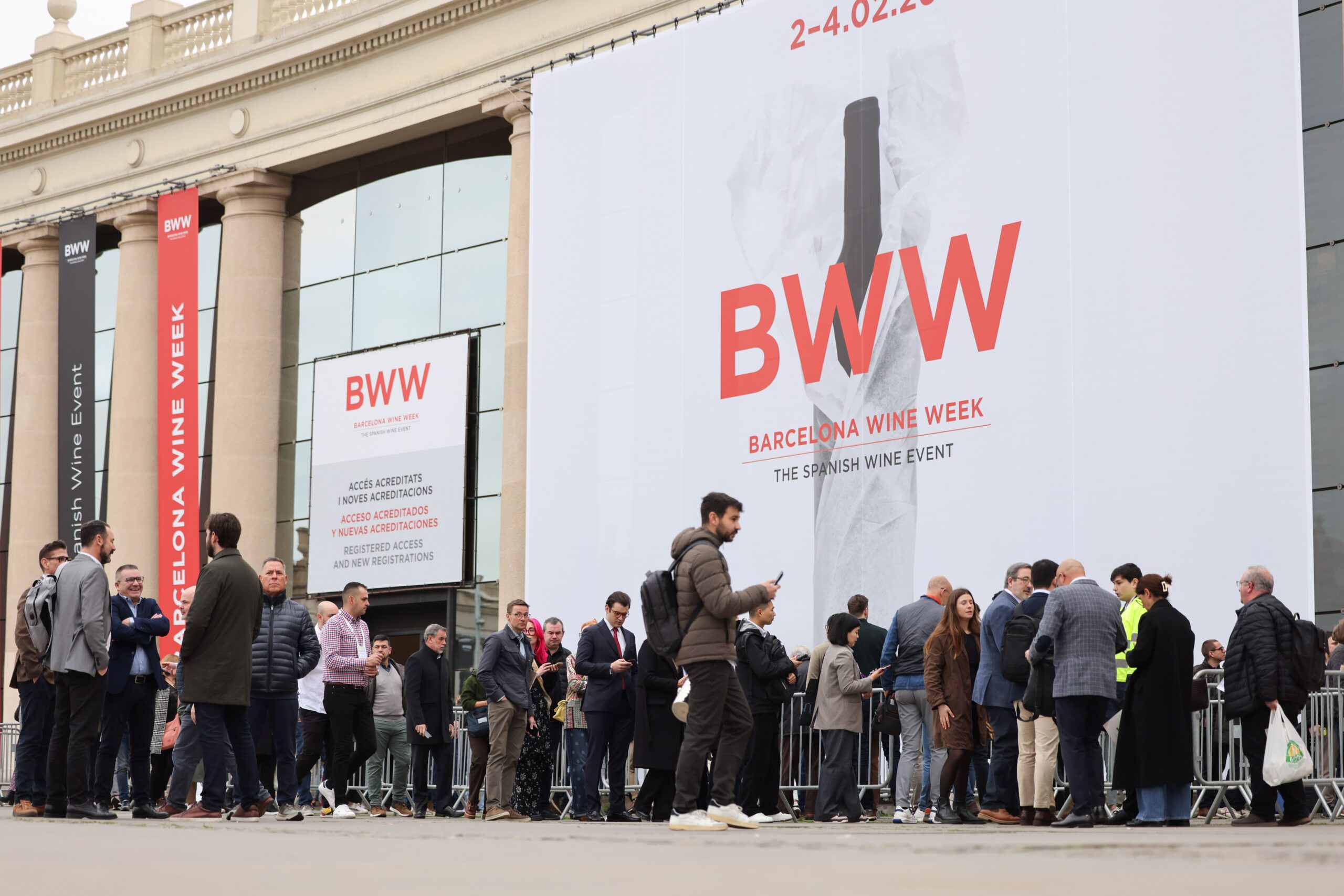
Wine shows are weird: you attend with hope and leave with a feeling you didn’t even scratch the surface. As of February 2026 it’s just my second Barcelona Wine Week (BWW). Since my move to Portugal, Barcelona has become a close getaway. And BWW is the biggest show of Spanish wines and wineries; certainly, in terms of numbers. More than 1,350 wineries, 90 D.O.s and quality demarcations and something that looked like a lot of visitors.
While the economical spirit of 2026 event is directly tied to the political one, winemakers of today are facing a totally different landscape than even a year or two ago. Wine exhibitions are cutting holes in wineries’ budgets and most have to carefully choose where to funnel them to get the best returns.
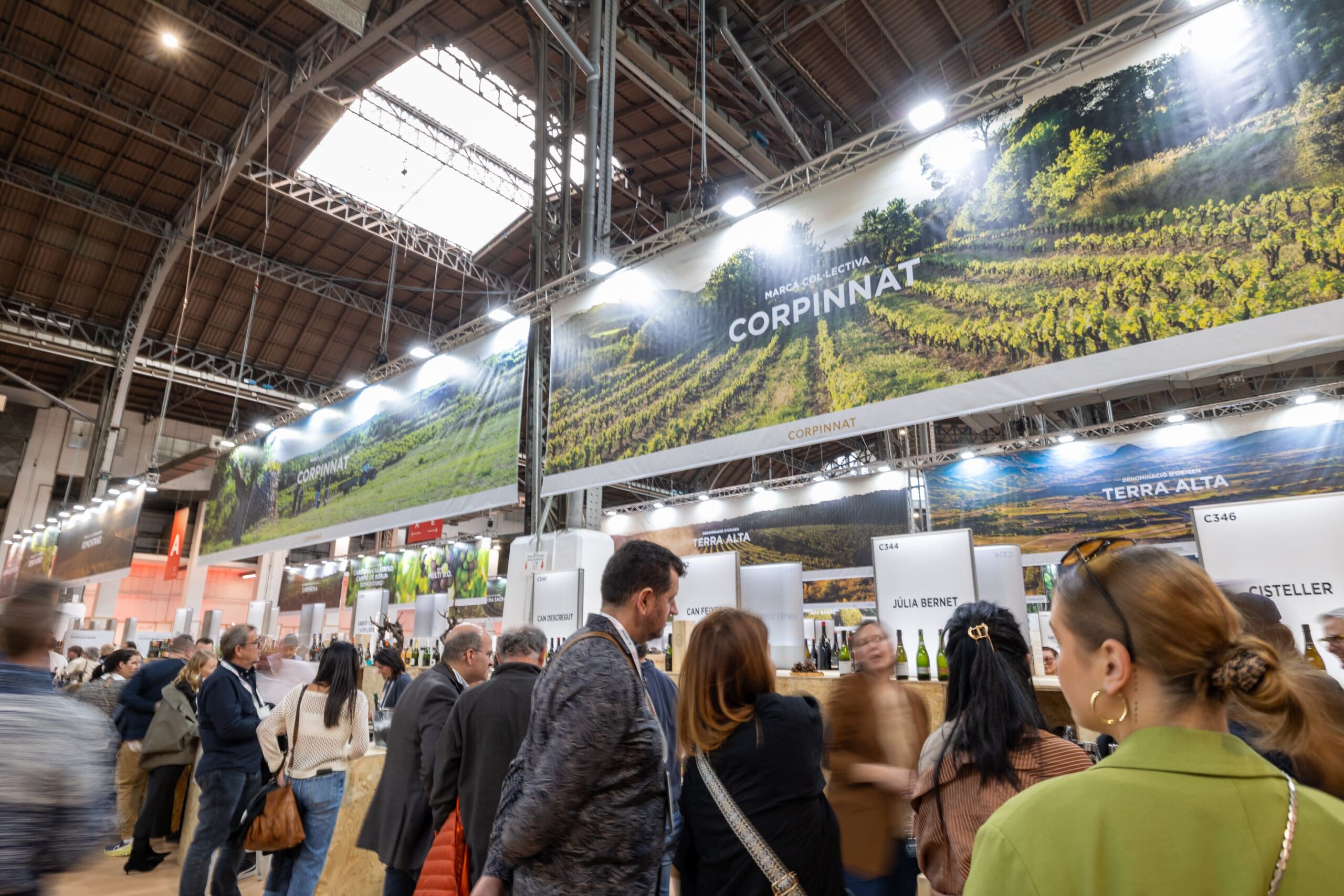
To understand whether Barcelona Wine Week is the place where winemakers get a fair share of exposure and trade professionals find what they seek for their respective fields and markets, I strolled around the two huge halls of the exhibition and sat down to talk to the organizers: Céline Perez, Event Director at Alimentaria Exhibitions in charge of BWW operations, Javier Pagés, the president of BWW and, separately with María Naranjo Crespo, the director of the Agri-Food sector at ICEX, the Spanish trade commission, whose role is to detect and seize investment and promotional opportunities for the Spanish agri-sector.
The origins of BWW and how it works
Barcelona Wine Week emerged as a highly specialized spin-off from the food giant Alimentaria, designed to give Spanish wine its own stage. Organized by Fira de Barcelona, it operates with a unique public-private spirit. Céline Perez explains that the project was born from a specific structural challenge in the Spanish market: “From the start, we identified a clear need in the market. Spain is one of the world’s major wine-producing countries, yet it cannot absorb all its production domestically. There is a strong need to internationalise and, at the same time, to improve the global perception and positioning of Spanish wine.”
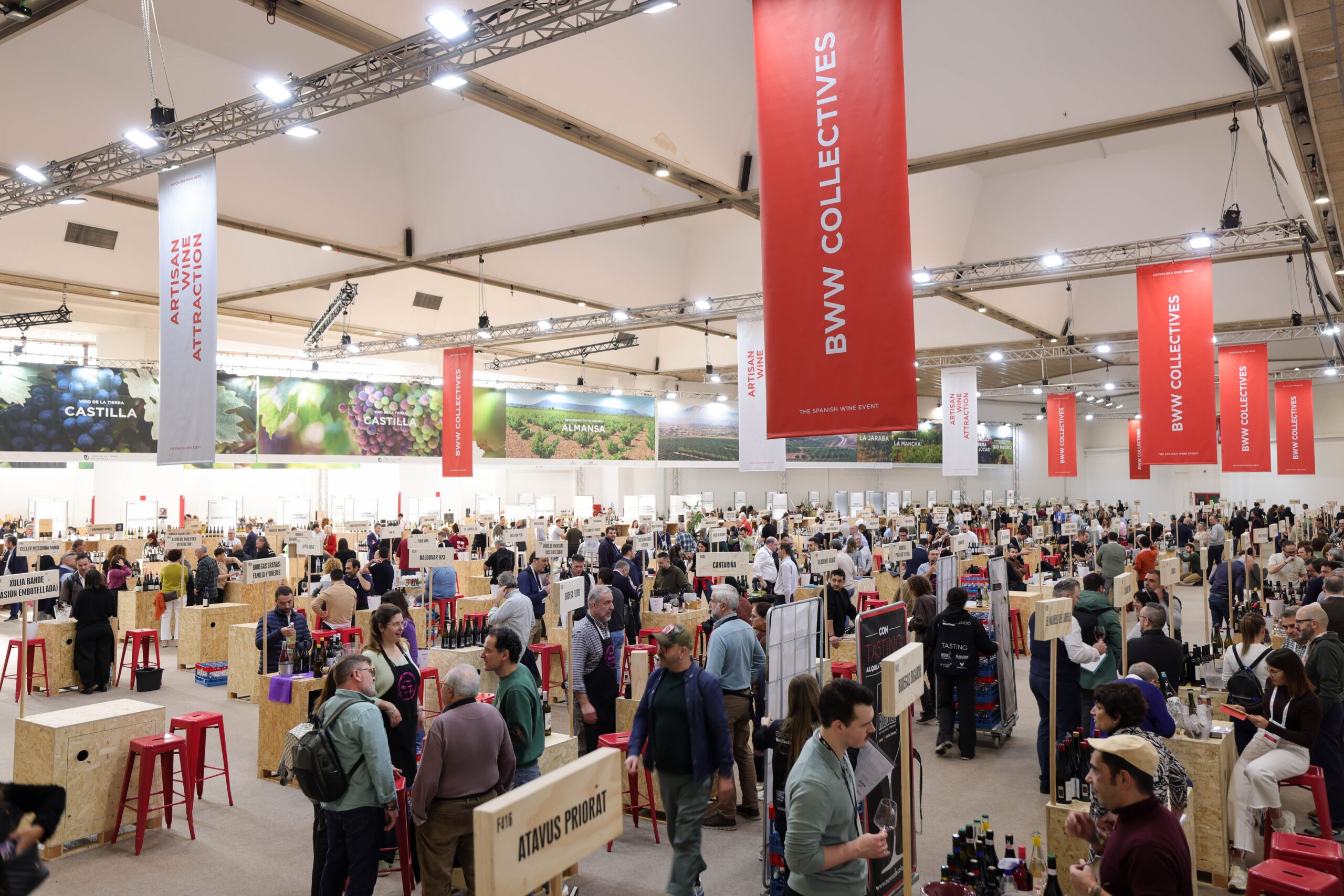
What started as a young fair has rapidly consolidated. Javier Pagés, the BWW President, describes it as a mission of identity: “Barcelona Wine Week is still a young fair—it is only in its sixth edition—but it started with a very clear vision: to be the international trade fair for Spanish wine. What you find here is an extensive and representative panorama of Spain’s wine regions, denominations of origin, and producers. It is a national fair by definition, and that positioning has been intentional from the beginning.” Today, the fair has reached its physical limits at the Montjuïc venue at Plaça d’Espanya. “At the moment, we can say that we represent around one out of every three wineries in Spain,” Perez adds. “That is a very good figure. We are very happy with the representativeness of all denominations of origin and all autonomous communities.”
Flying through markets turbulence
Safe to say the 6th BWW edition faces a complex global reality. Geopolitical instability and trade barriers have forced a pivot toward aggressive diversification. While the US market remains a titan, the focus is shifting toward “long-game” markets. María Naranjo Crespo notes that this requires strategic patience: “Uncertainty is constant, but brand-building is a long-term process. The U.S. remains a key market, and there is no alternative that can replace it in the short term. Our task is to help wineries identify niches, positioning strategies, and consumer segments—such as premiumization or gastronomy-driven demand.”
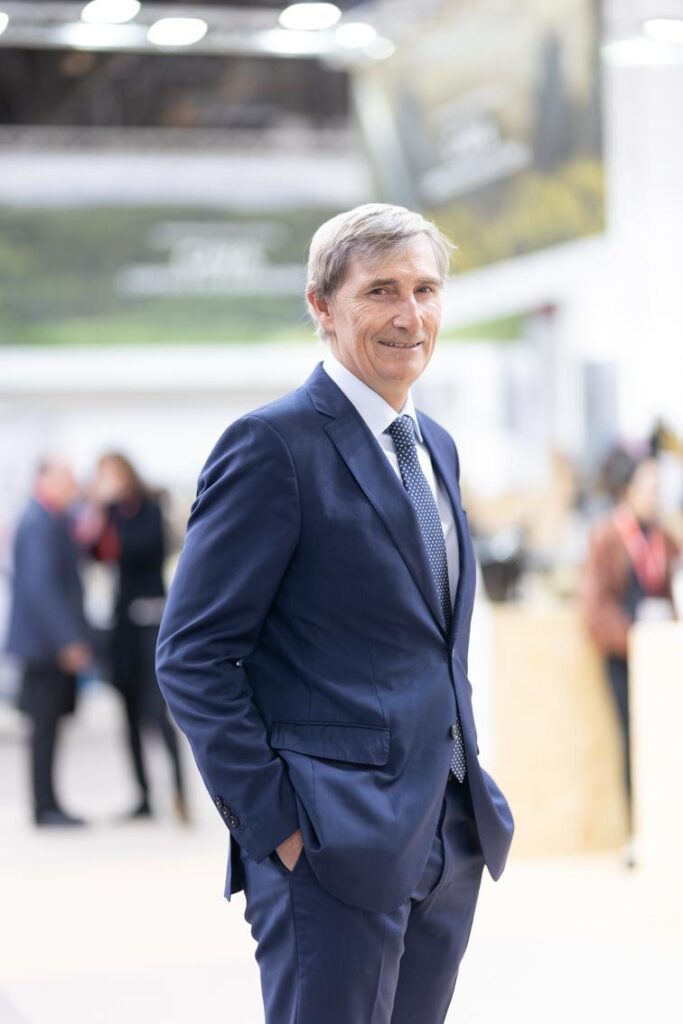 Javier Pagés, the President of Barcelona Wine Week
The fair acts as a protective shield for wineries navigating these shifts. Céline Perez highlights the necessity of reaching outward: “Spain cannot absorb all the wine it produces, so international buyers are essential. We work with ICEX and the Ministry of Agriculture to invite hosted buyers, covering travel and accommodation. This year we are inviting around 880 international buyers.” Javier Pagés remains pragmatic about the external pressures: “Internationalisation always comes with challenges—tariffs, currencies, regulations—but the market remains there. American consumers like European wines, and that will not change. This is a long-term business. Like agriculture, wine has good years and bad years. What matters is that the long-term curve continues upward.”
The products vs the spectacle
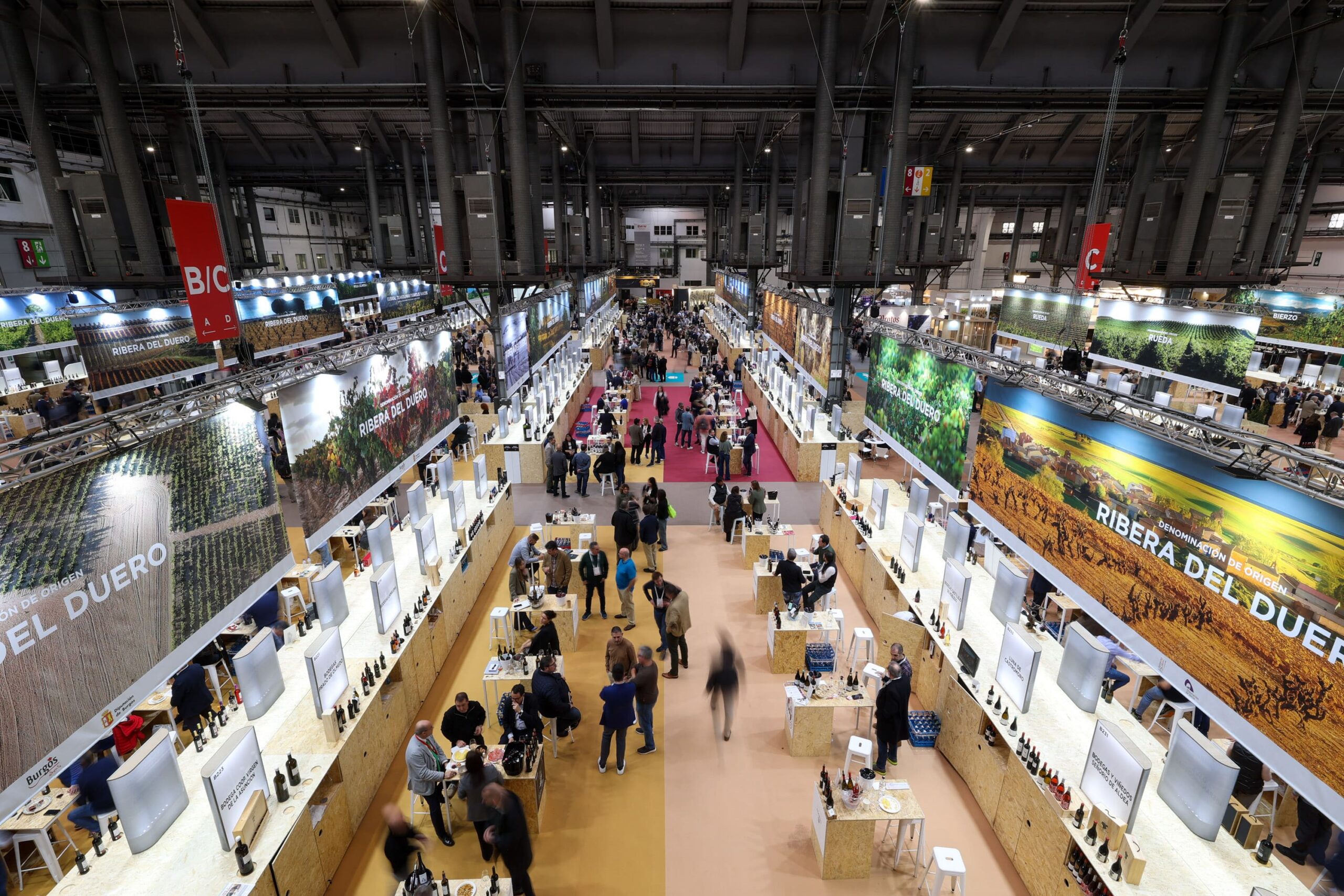
The specific strategy of BWW is a deliberate rejection of the “arms race” seen in stand designs and stand dimensions at other fairs. The layout is democratic, emphasizing the liquid over the architecture. Some wineries still want to stand out—and they are present with bigger compositions, but for now it’s more of an exception than a rule at BWW. Céline Perez is adamant that the wine itself provides the excitement: “If the product is truly at the center, the show cannot become boring. This is a professional business event, not an entertainment show. Innovation and diversity come from the wines themselves, from what exhibitors present year after year.”
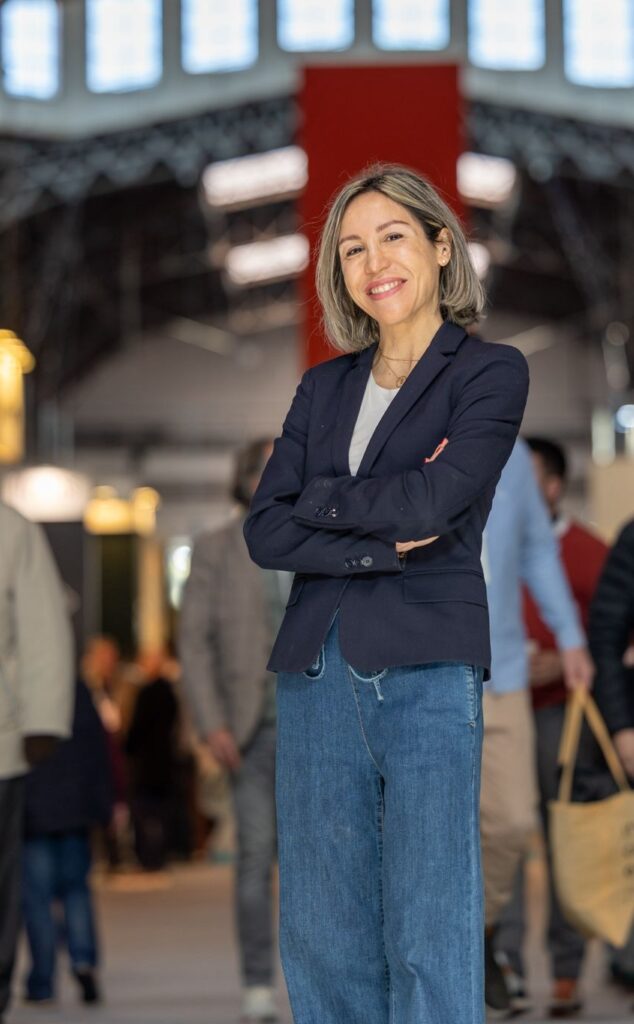 Céline Perez, Event Director at Alimentaria Exhibitions / BWW
By limiting the investment required for massive stands, the fair ensures a better return for its participants. Javier Pagés explains the commercial logic behind this aesthetic choice: “From the outset, the concept was to limit excessive spending on stand construction. The goal is for wineries to invest in wines, people, and meetings—not in expensive structures. Large, highly theatrical stands may look impressive, but they often generate poor return on investment. That creates internal resistance within companies when deciding whether to participate again.”
D.O.s vs producers: balance and structure
The exhibition is built on a regional backbone, with 90 Denominations of Origin acting as the narrative guides. This structure allows the fair to showcase the traditional territorial diversity of Spain while giving individual producers the freedom to highlight their unique brand identities. Céline Perez notes the importance of this ecosystem: “For each trade show, we work with a dedicated steering committee made up of the most important stakeholders of the industry. In the case of wine, this includes representatives of denominations of origin, major associations, professional organizations, and public administrations.”
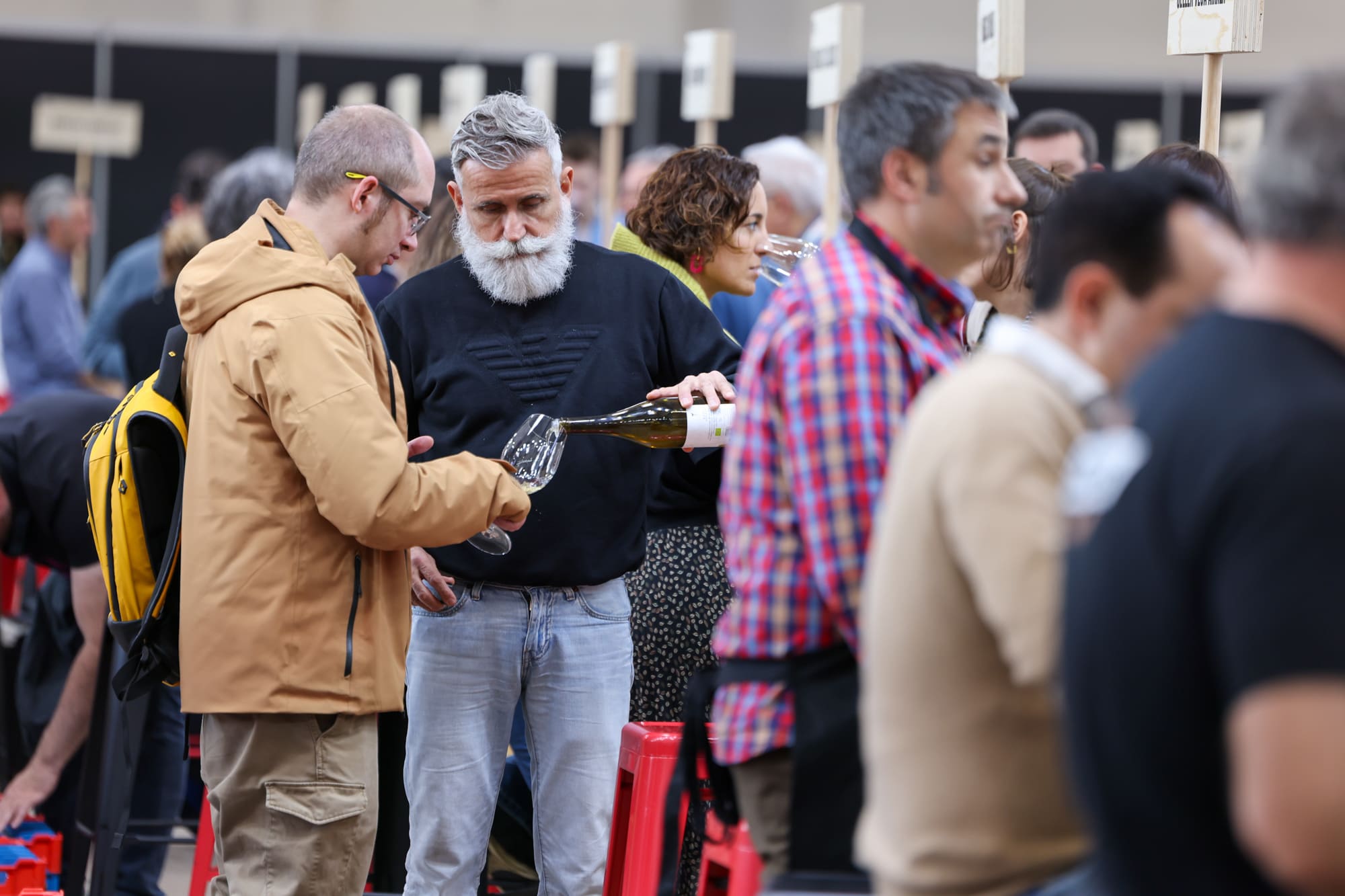
María Naranjo Crespo of ICEX adds that this format is particularly effective for the smaller players: “Barcelona Wine Week works well for both large and small producers. Many wineries receive regional or national support, but many small producers participate independently because the format is efficient, modern, and commercially effective. The show reflects the diversity and transformation of Spanish wine over the last 30 years.” By the way, small producers are tactically scattered around the halls—as part of the independent sector as well as around the perimeter of the two big halls, so that visitor could—sooner or later—get used to this format and navigate it easily.
Vinitaly’s sibling?
BWW holds a unique position in the European circuit. Its timing in early February allows it to set the commercial tone for the year before Wine Paris, ProWein, and Vinitaly. And, of course, Vinitaly is the closest fair in terms of its spirit, approach and format: a one-country-exclusive event.
Interestingly, the official numbers showcase the difference in scale of the two shows:
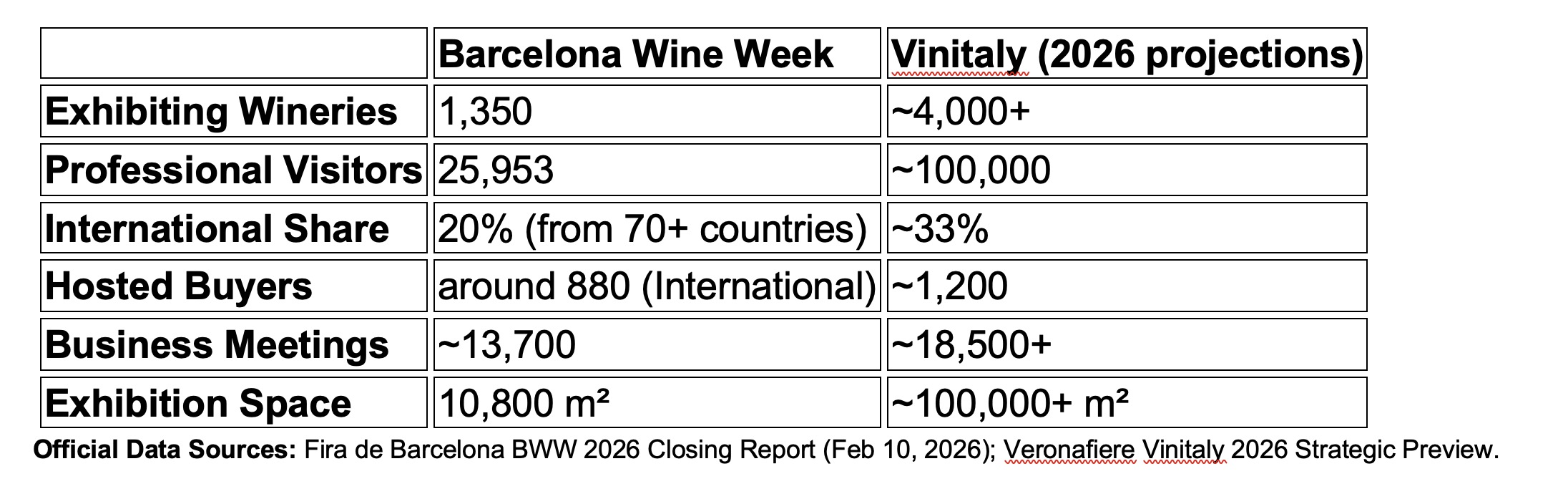
Compared to its “Italian sibling,” BWW is a high-density business engine. It achieves nearly 75% of Vinitaly’s meeting volume in roughly 10% of the physical space. Javier Pagés notes that the timing is part of the advantage: “The timing of Barcelona Wine Week—at the very beginning of the year—is also strategic. It allows wineries to review their business plans, adjust strategies, and even launch new commercial actions early in the year.”
Always room for improvement
While BWW is clearly expanding and meeting its own objectives, there are still areas where it could evolve further—at least from my perspective (and I’m not an importer). Spain arguably has more to offer than what is currently foregrounded, particularly when it comes to the intersection of wine, gastronomy, and tourism. Despite the scale and relevance of the event, these connections did not always come through as strongly, even though the interdependence of these sectors is evident on the ground.
María Naranjo Crespo points out that ICEX is already exploring this direction: “The Restaurants from Spain certification recognizes international restaurants that use Spanish products. These restaurants become ambassadors for Spanish food and wine, and we support them through promotion and training.”
Hopefully, more seminars and talks grounded in concrete data and current research will be taking place—addressing the future of Spanish wine through measurable market trends, evolving appellation structures, advances in agronomy and winemaking science, and emerging approaches to terroir classification, supported by wines that directly illustrate these findings.
One thing is certain: wine is and will remain the main focus of the event. In the end, it’s the trade and winemakers who vote with their presence and business deals for BWW strategies, confirmed by José Luis Robredo, the General Manager of the Spanish Wine Federation (FEV): “When we decided to expand to two pavilions, there was concern about whether we could fill them. In the end, we were almost overbooked, and this year we were fully overbooked. This confirms that Barcelona Wine Week is the place to be for Spanish wine—big, small, or medium wineries alike”.
“A trade fair is never static; it evolves year after year,” adds Javier Pagés. And I hope Barcelona Wine Week will continue evolving into something irresistible for all wine professionals.
Photographs © Barcelona Wine Week / Fira Barcelona