


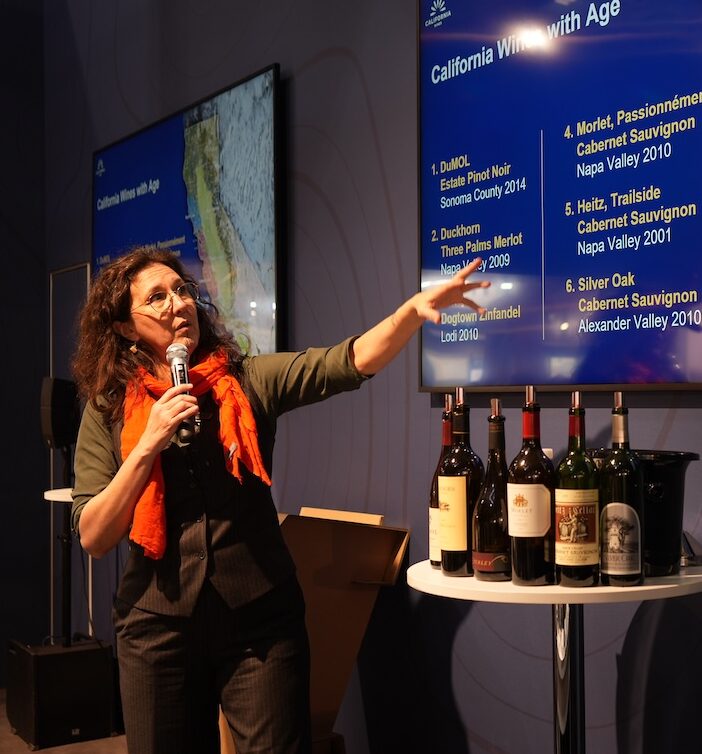
I don’t really know where the notion that California reds can’t age is coming from. Is it because big and bold wines are considered too big and too bold to stand on their own feet over time? There was no lack of inspirational masterclasses at Wine Paris this year, but day one stood out with several beautiful tastings. One of them was a showcase of California’s older wines.
The tasting was led by Elaine Chukan Brown, who, over the course of her journalistic career, has immersed herself deeply in California’s terroirs. Constrained, perhaps, by the formal conventions governing professional tastings, she remained within established parameters, yet still managed to convey substantial and engaging information about the six wines presented—all within the span of a single, tightly timed hour. The wines line-up showcased a range of stylistic expressions, including red wines from different cépages, terroirs and vintages.
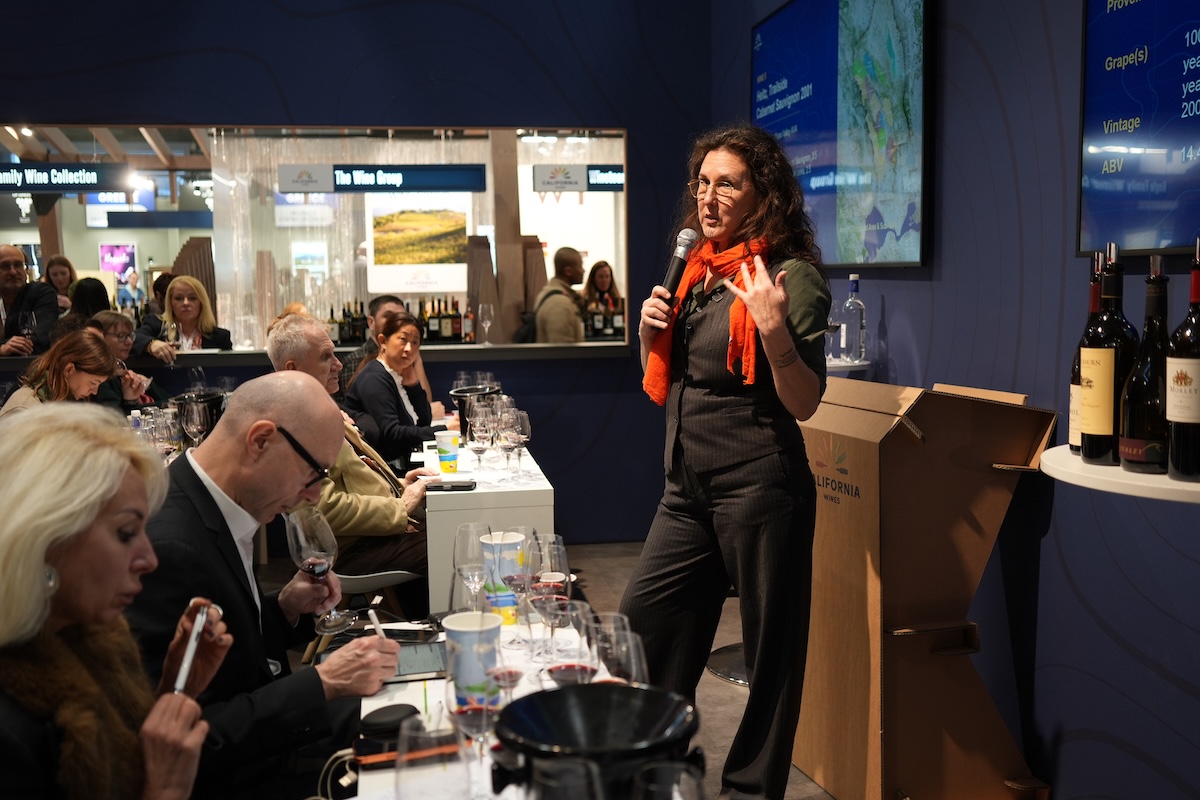 For me California is a distant mystery: half-planet away from Porto where I’m based. For Elaine it’s a backyard playground. The inclusion of back vintages reaching as far as 2001 created a meaningful opportunity to deepen my understanding while also offering genuine sensory pleasure, carefully curated by the California Wine Institute. In the text below Elaine’s own words are followed by my wine impressions. Let’s roll, nerds!
2014 DuMoL, Pinot Noir, Estate Vineyard, Russian River Valley
“DuMOL is a newer iconic winery that started in the late ’80s and early 2000s. This particular wine is from their estate vineyard in the coolest part of the Russian River Valley. It is far west, so the ocean influence pours in with intense fog every morning. This fog slows down ripening and cools the soil, which results in more concentration, structure, and acidity.
This is entirely Pinot Noir. In the Russian River, you often get bright cherry fruit, but in this colder area, it tends to be more herbal and earthy. Looking at the 2014 vintage, it was the third year of a serious drought. Yields were lower, berries were smaller, and harvest was early. This created more structure and a tannic cut that gives the wine texture. Even at 12 years old, the freshness is impressive.”
My take: cherry stonefruit, silky smooth tannin, light on the nose, dusty, crushed pine needles 93
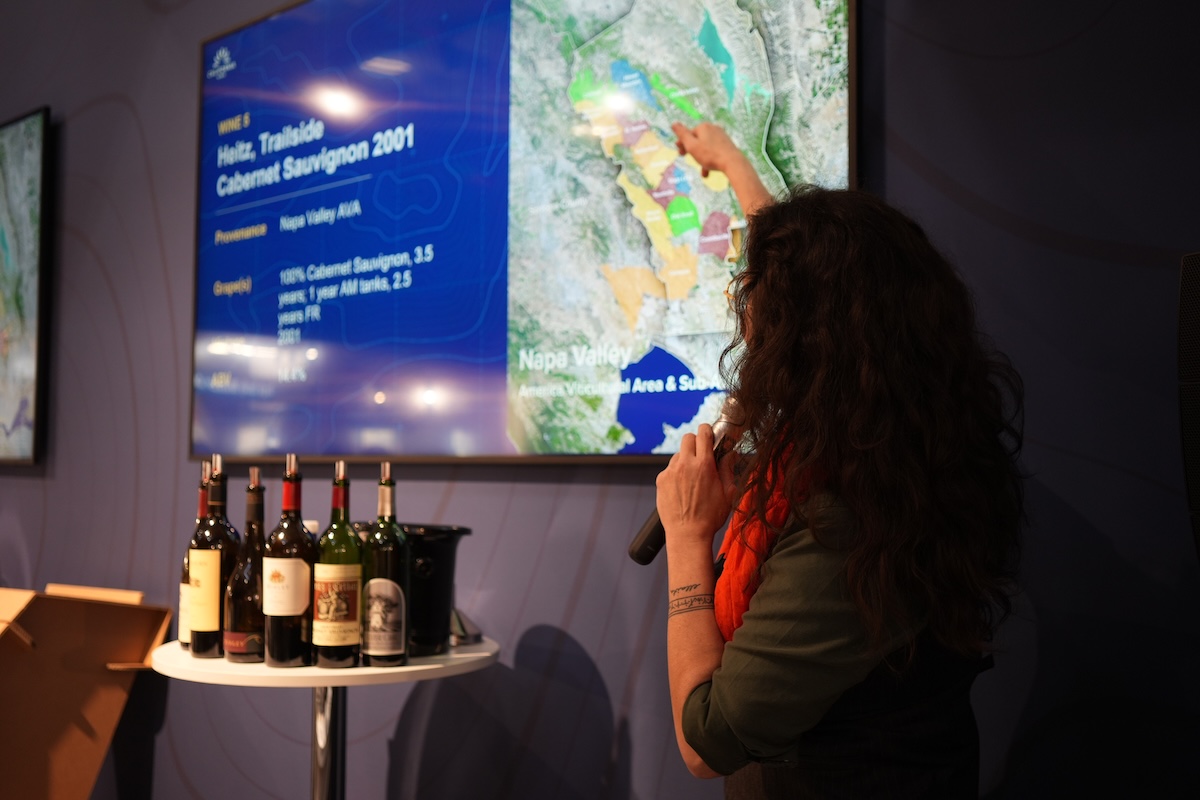
2001 Heitz Wine Cellars, Cabernet Sauvignon, Trailside Vineyard, St. Helena
“This is 100% Cabernet Sauvignon from the eastern side of the valley. This side is drier because it faces the afternoon sun. The Trailside Vineyard sits on a very old alluvial fan with volcanic soils. This wine represents an “old school” view of winemaking. Joe Heitz founded the winery in the ’60s, and his style was influenced by the technology of that era. This wine was aged for a year in large American oak tanks before finishing for two and a half years in French barrels. It is an intersection of California history. At 25 years old, this 2001 vintage shows the power and age-ability that the region is capable of.”
My take: smooth, thin-ish, elegant, with age it lost a lot of Cabernet character towards Pinot Noir style 91
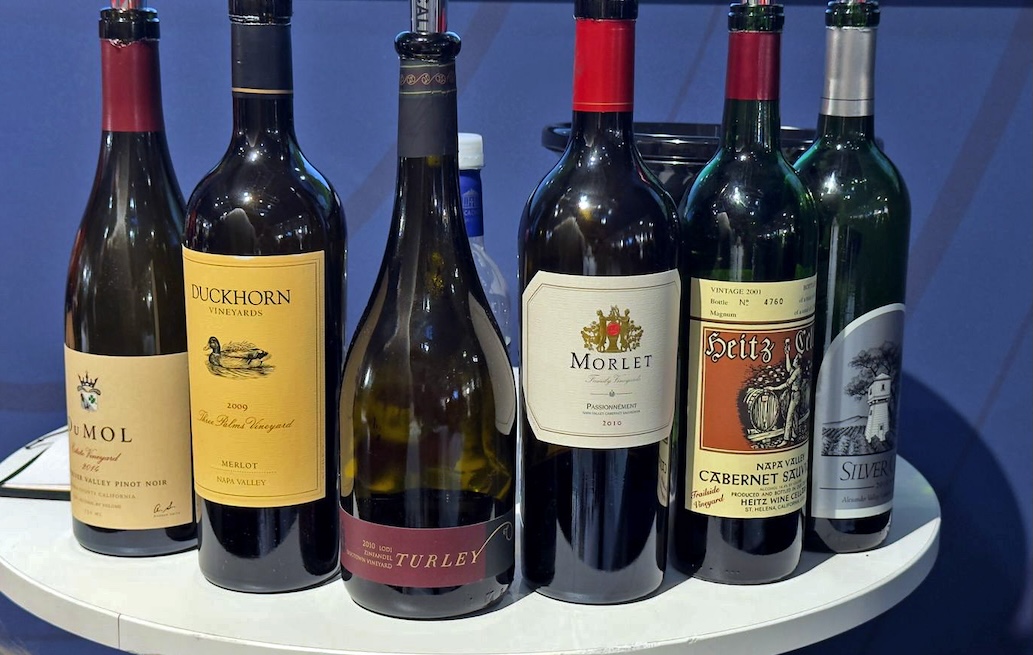
2010 Silver Oak, Cabernet Sauvignon, Alexander Valley
“Moving to Sonoma County, we look at the Alexander Valley. This is a warmer area. While Silver Oak makes a Napa blend, the Alexander Valley bottling is consistently about 100% Cabernet. It spent 24 months in American oak, 50% of which was new.
Silver Oak is thoroughly committed to American oak—they even run their own cooperage. You often find a resinous, minty, or “forest” character in these wines. This comes both from the drier plant life in the northern part of the county and the high-toned herbal effect of the American oak.”
My take: obviously, Cab: intense jammy blackcurrant, nicely textured, balanced and minty 90
2010 Morlet, Passionnément Cabernet Sauvignon, Napa Valley
“This is 100% Cabernet back in Napa Valley, specifically from the Oakville’s rocky and free-draining area. This bottling is by name rather than a single vineyard; “Passionnément” is about making a wine that is intense and fiery.
Compared to the previous wines, this one is aged entirely in French oak. 2010 was a cold vintage until a heat spike at harvest, making it a difficult but rewarding year. You get deep fruit and tough tannins that are well-integrated, providing a very direct Cabernet character.”
My take: big cab aromas, inky, with firm tannin, very straightforward 91
2010 Turley Wines, Zinfandel, Dogtown Vineyard, Lodi
“Now we talk about Lodi and Zinfandel—California’s heritage grape. These vines were planted in the 1920s; they are head-trained and own-rooted. Lodi gets the warmth of the valley but is balanced by the cold ocean influence from the Delta, which keeps the acidity and structure.
This one shows that Zinfandel can age. This vineyard is ungrafted and dry-farmed. It is a big, sumptuous wine that demonstrates why Zinfandel was historically the most planted variety in the region.”
My take: lots of tea leaves, moody tobacco, dark decadence 90
2009 Duckhorn, Merlot, Three Palms Vineyard Estate, Napa Valley
“Finally, we go back to Napa Valley for the wine that demonstrated Merlot could work here. Three Palms Vineyard is in the warmer northern part of the valley. Duckhorn made their reputation on this vineyard starting in the ’70s.
The 2009 vintage was very even and reliable. This wine is aged entirely in new French oak. It shows the darker, riper side of the variety with fig and spice notes. Even though it is a warmer style, it has aged with a freshness and vibrancy that many find surprising for its age.”
My take: cherry, raspberry, red currant. Cola and dusty road after light rain. Fig flavors and enticing spices 91